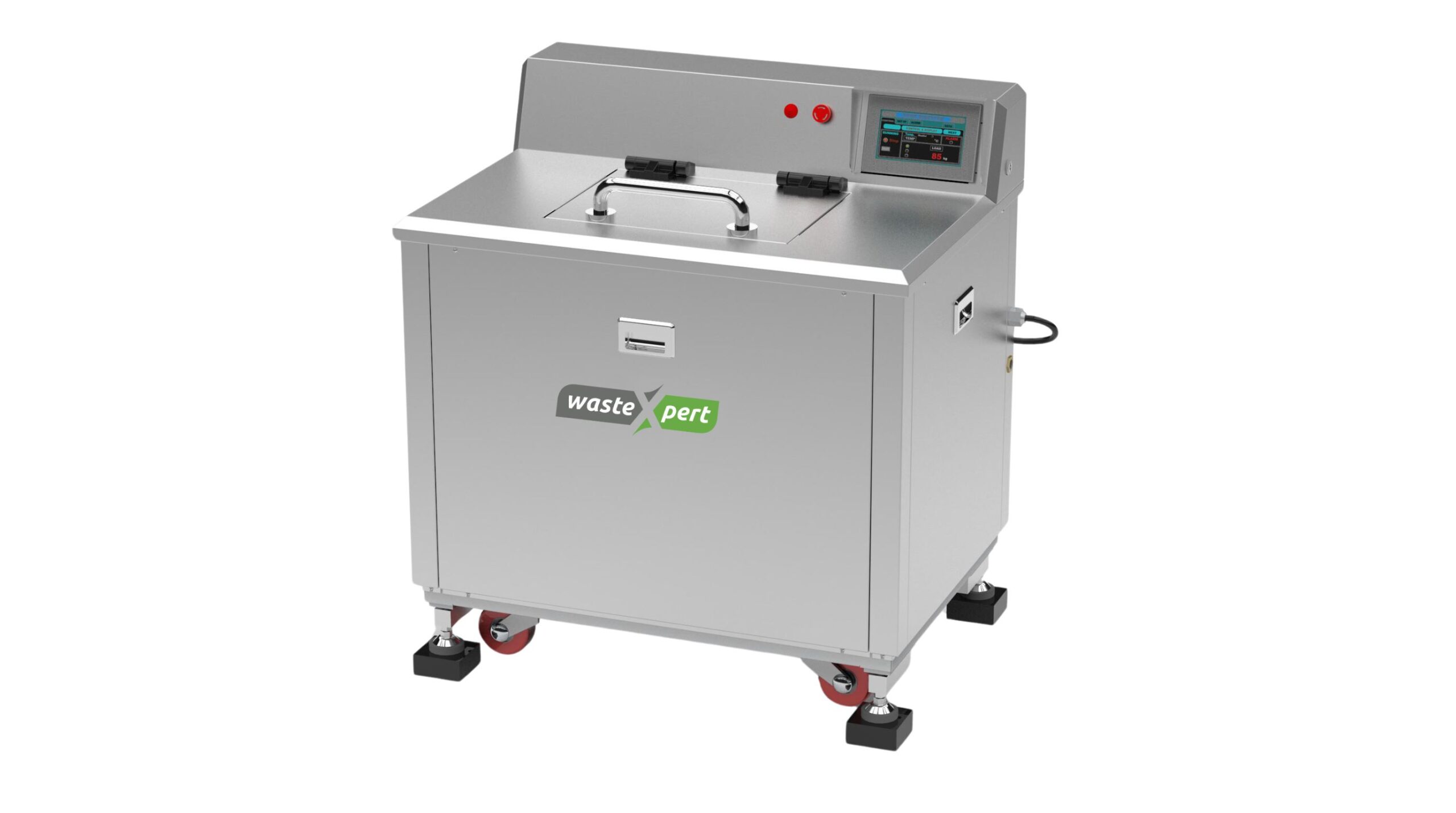
WasteXpert Digester — commercial installation
Stainless steel construction, sealed doors, and a footprint sized for back-of-house — the Digester works quietly alongside your daily service.



A state-of-the-art machine which can convert food waste into grey water and CO2 in just 24 hours by using eco-friendly patented microorganisms and enzymes.
Read More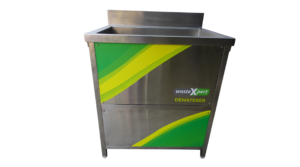
A machine that has been specially engineered to turn high volume organic waste that is bulky into 75% less semi dry output, making waste management cleaner, odorless, and significantly more manageable for commercial kitchens and industries.
Read More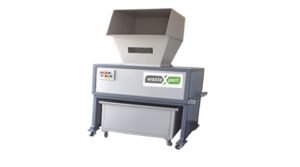
A highly durable organic waste shredder that is ideal for processing garden waste, hard food items like bones and coconut shells etc, real time and continuously.
Read More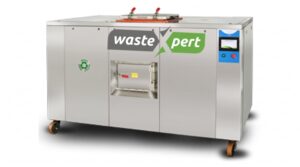
An automated machine specifically designed to process organic food waste in 24 to 36 hours through rapid aerobic decomposition transforming food scraps into nutrient-rich organic pre-compost.
Read MoreA proprietary blend of bio-microorganisms and enzymes does the work — no chopping, no grinding, no chemicals.
Raw or cooked food waste is loaded directly — almost anything except very large bones.
Proprietary microorganisms and enzymes begin aerobic decomposition inside the sealed drum.
Waste continues breaking down; the machine keeps weighing and monitoring the load throughout.
What's left exits as grey water into your sewage line and CO₂ — no solid waste to haul away.
What changes on the ground once waste stops leaving your building.
No per-kilo hauling fees or landfill tipping charges — waste is processed where it's generated, most sites recover the machine cost within about 12 months.
No more staff time spent moving bins to a loading dock or waiting on a collection truck's schedule.
Sealed, mechanical doors and a deodorization system mean no rotting waste sitting in bins overnight.
Diverting waste from landfill avoids the methane it would otherwise generate — methane is far more damaging to the atmosphere than the CO₂ our process releases.
From single-outlet restaurants to large institutional kitchens — every unit shares the same build quality.
Compact footprint for single-kitchen operations with lower daily waste volumes.
Sized for multi-outlet kitchens and daily institutional meal service.
Highest-throughput configuration for large hostels, hospitals and industrial cafeterias.












Tell us your kitchen's waste volume and we'll recommend the right unit for your operation — no obligation.
Takes under a minute. Our team will call to confirm the right model and next steps.
No. The aerobic decomposition without chopping or grinding helps in greater digestion thereby reducing the Total Suspended Solids (TSS) and Biological Oxygen Demand (BOD) levels. The output (grey water and CO2) discharged contains 300ppm of BOD level on an average depending on the type of food fed to the machine, which is within the permissible limit to be treated further in a sewage treatment plant. Moreover, small quantity of microorganisms and enzymes that drains out with the grey water keeps treating the discharge and further reduces its BOD level in the process.
There are load cells mounted on each corner of the WasteXpert Digester which help weigh the total amount of food waste. The software calculates the weight automatically and warns with an alarm in case of overweight.
No. WasteXpert Digester is designed with mechanical door sealing so there is no chance of leakage or odour. It also has deodorization systems and an automatic water/flush system.
No. While our machines are highly durable and made of SS304, we advise using soft water for longevity and hassle-free operation.
No. All our processes are totally green. Microorganisms are natural and eco-friendly. WasteXpert Digester activates these microorganisms to accelerate the decomposition of organic waste, allowing food waste to decompose within 24 hours.
No. You can feed food waste into the machine whenever required. It continuously decomposes organic waste, and door sensors automatically stop the machine when the door is opened, making it safe and intelligent.
The enzymes need to be replenished once a year, while the biostar needs replacement approximately once every three years. The quantity of enzymes depends on the machine's capacity.